Posted by admin
Australia’s wine industry operates across a remarkably wide range of climates — from the warm, dry vineyards of the Barossa and Riverland to the cooler, damper regions of Tasmania, the Yarra Valley, and parts of Victoria and Western Australia. This climatic diversity is part of what makes Australian wine so distinctive, but it also means winemakers face very different environmental challenges depending on where they operate.
While temperature control tends to dominate conversations about wine production and storage, humidity is just as critical — and often overlooked until it becomes a problem.
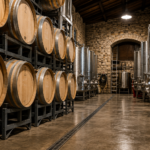
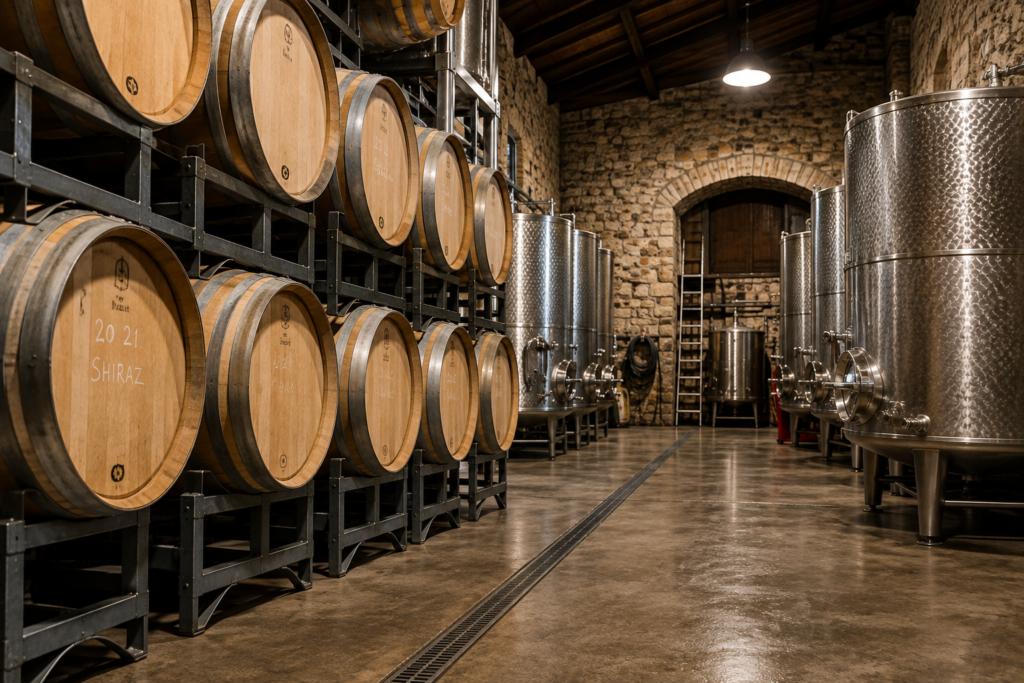
Barrel rooms and cellars are typically kept cool and are often naturally humid, especially in underground or semi-enclosed spaces. Some humidity is actually desirable here — it helps prevent excessive evaporation (the “angel’s share”) from wooden barrels. But when humidity climbs too high or fluctuates unpredictably, the risks start to outweigh the benefits.
Excess moisture in these spaces can lead to:
Humidity issues aren’t confined to barrel rooms. Production areas, bottling lines, and finished-goods storage facilities are all vulnerable to moisture-related problems. Corrugated packaging can weaken and lose structural integrity in damp conditions, timber storage racks can warp, and metal fixtures and equipment are more prone to corrosion. For wineries managing large volumes of stock ahead of distribution, even minor humidity fluctuations can add up to significant product and equipment losses over time.
This is where effective humidity control — including the appropriate use of commercial dehumidification — becomes an essential part of winery operations rather than an optional extra.
Commercial dehumidification systems help wineries:
Humidity control doesn’t always get the same attention as temperature management in winemaking, but the risks of getting it wrong are just as real — mould, condensation damage, spoiled packaging, and uncomfortable, unsafe working environments can all quietly erode product quality and operational efficiency over time.
For Australian wineries operating across such varied climates, investing in effective humidity control — and commercial dehumidification where appropriate — is a practical, protective measure rather than a luxury. It safeguards not just the wine itself, but the barrels, packaging, equipment, and people that make up the winery’s day-to-day operations.
Ultimately, stable environmental conditions support consistent quality, reduce long-term costs from moisture-related damage, and help wineries — large and small — put their best product forward, vintage after vintage.