Posted by admin
Commercial ventilation and dehumidification are often discussed together, yet they serve different functions within a building. It is common for facility managers, consultants, and building owners to assume one system can replace the other. In reality, ventilation and dehumidification address separate challenges, and in many environments, both are required to achieve stable indoor conditions.
Understanding the difference between these systems helps ensure the right solution is selected, avoiding ongoing humidity issues, discomfort, and unnecessary operating costs.
Commercial ventilation is the process of supplying fresh air to a building while removing stale or contaminated air. Its primary purpose is to maintain indoor air quality by diluting pollutants such as carbon dioxide, odours, and airborne contaminants.
Ventilation systems control airflow rates and distribution to ensure fresh air reaches occupied spaces. In commercial buildings, ventilation is often required to meet health, safety, and building code requirements. It plays a critical role in maintaining comfortable environments in offices, schools, retail spaces, and industrial facilities.
However, while ventilation can influence humidity levels, it is not designed to precisely control moisture on its own.
Dehumidification focuses specifically on removing moisture from the air. Dehumidifiers are designed to maintain humidity within a defined range, preventing condensation, mould growth, corrosion, and material deterioration.
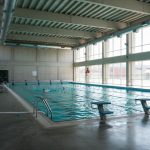
In environments where moisture generation is high, such as pools, manufacturing facilities, or food processing plants, humidity levels can exceed what ventilation alone can manage. Dehumidification systems actively extract moisture regardless of outdoor conditions, allowing for consistent humidity control year-round.
Unlike ventilation, dehumidification does not necessarily introduce fresh air. Its role is to stabilise internal moisture levels rather than manage air quality.
In some commercial environments, ventilation can help reduce humidity by exhausting moist air and replacing it with drier outdoor air. However, this approach has limitations.
Outdoor air is not always dry. In many climates, especially during warmer months, incoming air can carry significant moisture. Relying solely on ventilation in these conditions can actually increase indoor humidity rather than reduce it.
Ventilation rates are also governed by air quality requirements, not moisture loads. Increasing airflow beyond what is needed for air quality can lead to excessive energy consumption, temperature instability, and occupant discomfort.
As a result, ventilation alone often cannot maintain humidity within acceptable limits in high-moisture environments.
While dehumidification effectively controls moisture, it does not address indoor air quality on its own. Without ventilation, stale air, odours, and airborne contaminants can accumulate.
In occupied commercial spaces, fresh air is essential for health and comfort. Dehumidification systems are not designed to replace the need for controlled air exchange. This is why relying on dehumidification alone can result in poor air quality even if humidity levels are stable.
In many commercial applications, the most effective solution is a system that integrates both ventilation and dehumidification. This combined approach allows each system to perform its specific role while working together to maintain stable indoor conditions.
Ventilation ensures fresh air is supplied and contaminants are removed. Dehumidification maintains humidity within an optimal range regardless of external conditions. Together, they provide consistent comfort, protect building materials, and reduce the risk of moisture-related damage.
Integrated systems are particularly valuable in environments such as indoor pools, aquatic centres, food processing facilities, and manufacturing plants where both air quality and moisture control are critical.
A well-designed combined system can also improve energy efficiency. Rather than over-ventilating to control humidity, dehumidification allows ventilation rates to be set based on air quality needs alone.
This reduces unnecessary heat loss or gain and lowers the load on heating and cooling systems. Modern systems may also incorporate heat recovery, further improving operational efficiency.
By balancing airflow and moisture control, integrated solutions often result in lower long-term operating costs compared to standalone systems.
The decision to use ventilation, dehumidification, or both depends on several factors, including building use, occupancy levels, moisture generation, and local climate conditions.
Facilities with low moisture loads may require ventilation only. Spaces with high internal moisture generation almost always benefit from dedicated dehumidification alongside ventilation.
Correct system selection requires an understanding of airflow requirements, evaporation rates, temperature control, and building physics. Incorrect assumptions can lead to ongoing issues that are difficult to resolve once a system is installed.
Commercial ventilation and dehumidification are technical disciplines that benefit from specialist assessment and design. Each building presents unique challenges, and solutions must be tailored accordingly.
Dehum works with engineers, consultants, and facility operators to assess environmental conditions and specify systems that deliver reliable air quality and humidity control. This approach ensures systems perform as intended while supporting long-term building performance.
Commercial ventilation and dehumidification serve different but complementary roles. Understanding their differences, and recognising when both are required, is key to maintaining healthy, efficient, and durable indoor environments. A balanced, integrated approach provides the best outcomes for comfort, compliance, and asset protection.